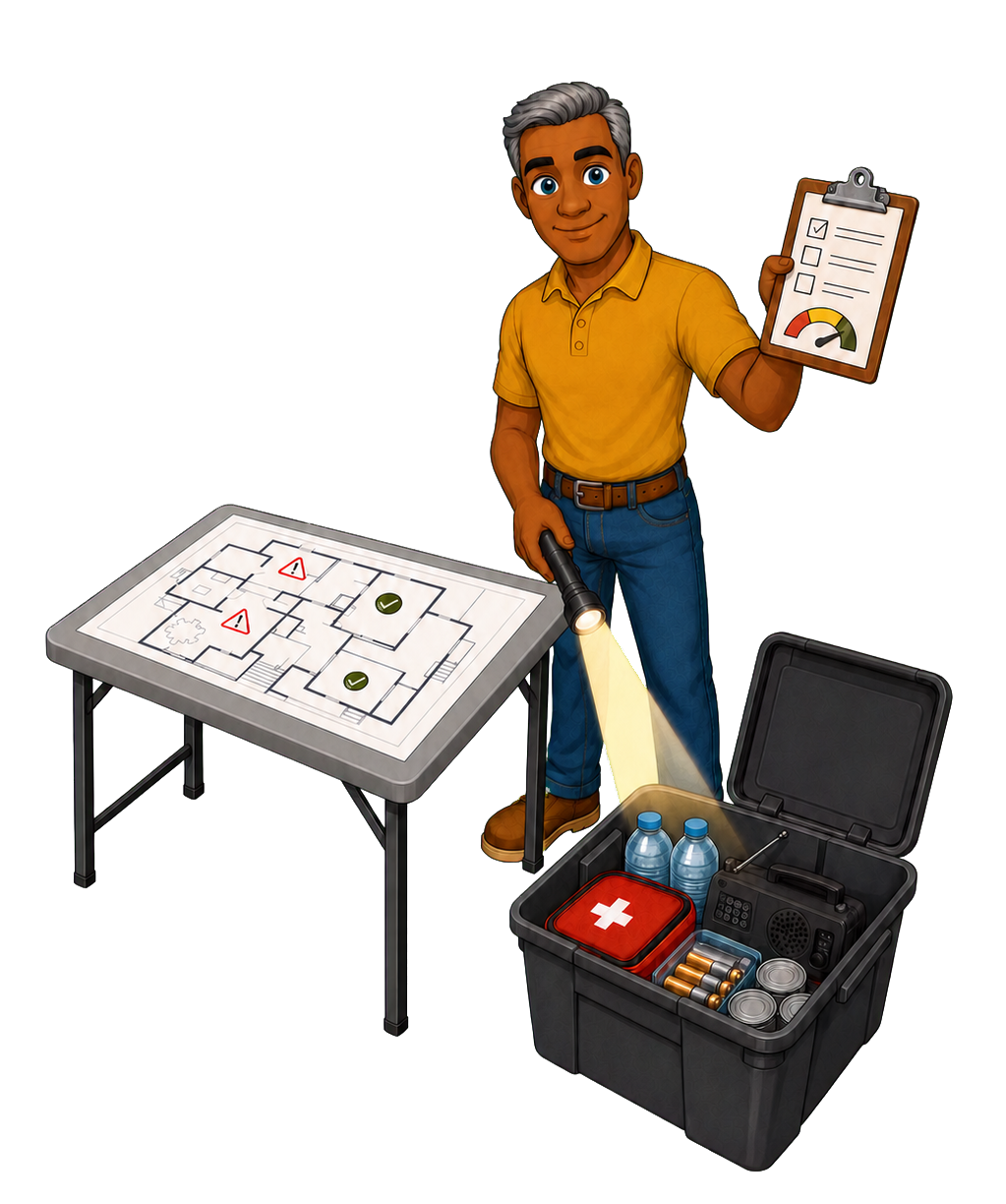
Most people answer “am I prepared?” with a gut feeling — and they’re usually wrong. Assessing replaces that guess with a measurement. You need to measure your preparedness against every preparedness category to see how you truly match up against expectations.
Assessing is also where you set the scope. What are you actually preparing for, and how far do you want to take it? A clear starting point and a clear end goal turn a vague intention into a plan you can measure progress against.
Lastly, this data primes every subsequent tool to make the entire process seamless. Answer questions once and reap rewards continually as your preparedness grows.
 Reality-Check
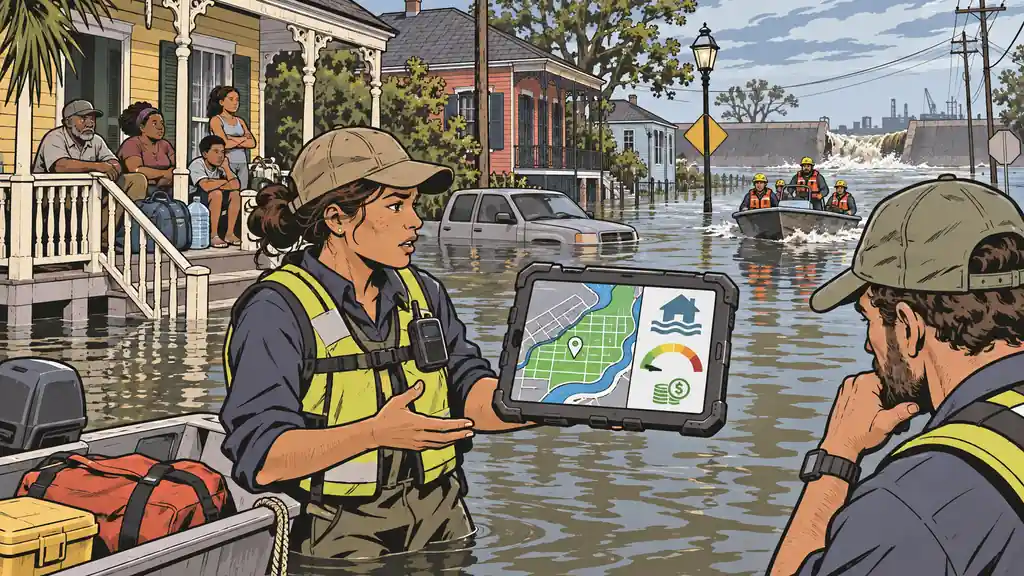
The National Risk Index is the most-cited free hazard tool in the country — baked into relocation sites, planning decisions, and 'is this town safe' searches. For flooding in the parish that Katrina drowned, it reads near the safest possible. The number isn't a glitch. It's the whole method showing through.
 Editorial
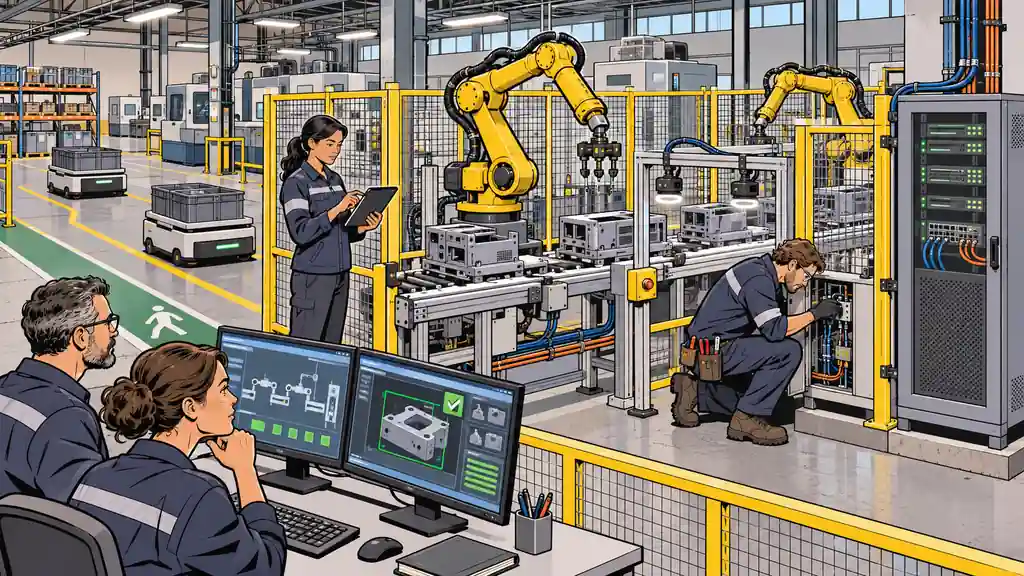
Most people think about an industrial revolution as being far in the past and was about steam trains or the switch from horses to cars. The truth is we just finished one and have started another that is poised to reshape society.
 Reality-Check
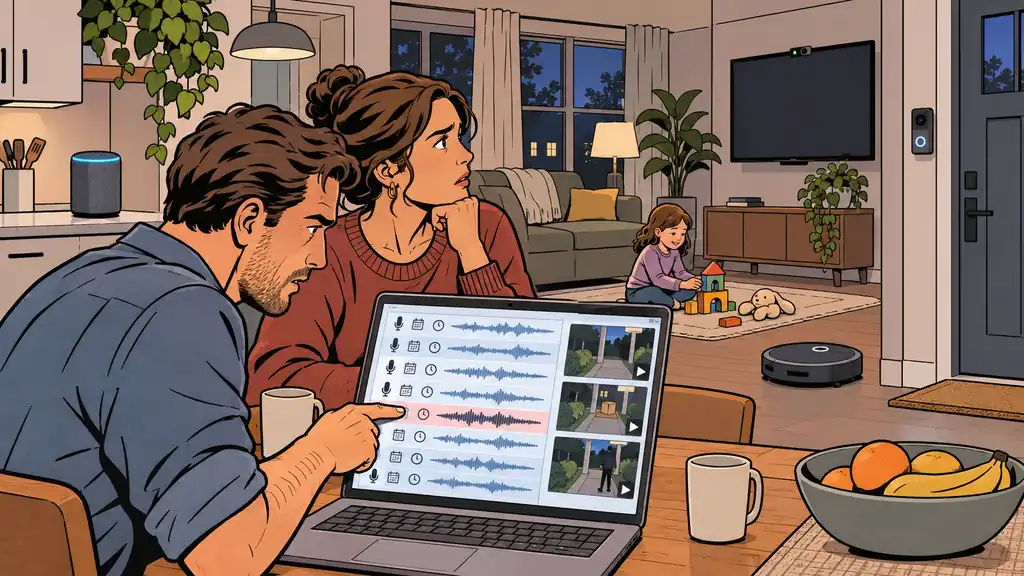
Your speaker, your doorbell camera, your TV — even your vacuum — is a networked sensor that keeps a record on a server you don't control. Courts have subpoenaed those recordings in murder cases; the FTC has fined Amazon, Ring, and Vizio over how they were kept; and gig workers have leaked them to Facebook. Here's what's real, what's overblown, and why it matters for a prepared household.
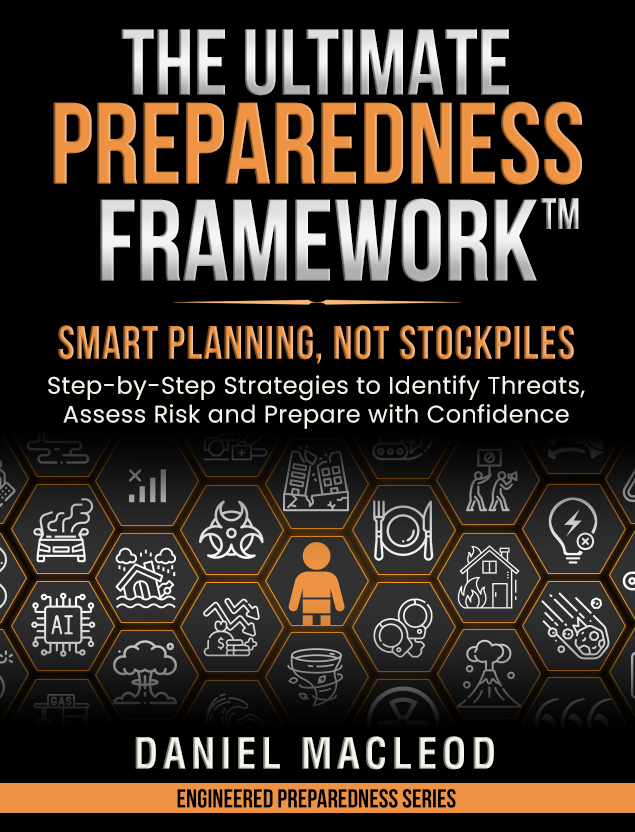
The Ultimate Preparedness Framework™ defines all six stages on paper — the reasoning, the worksheets, the math. This site is the same framework, compiled: the data pre-loaded and the worksheets live.
